What else is in there
Deciding your next session is the job. These are the parts that get you to open the app on a Tuesday in February.
The ladder
Ten tiers, built from every pound you have lifted
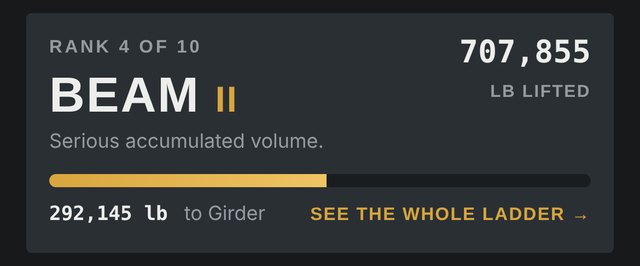
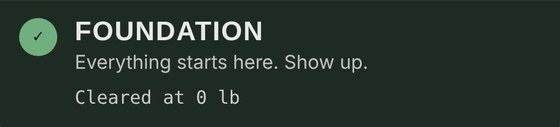
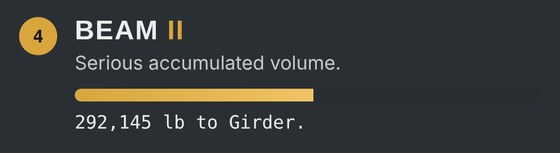
Every set you log adds to one running total, and that total moves you up a ladder of ten tiers, three divisions each: Foundation, Rebar, Joist, Beam, Girder, Pillar, Truss, Archway, Keystone, Monolith. Deleting a block does not cost you the tonnage. You keep what you moved.
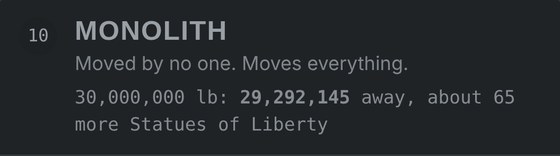
It also tells you what that weight actually looks like. Not an abstract number: grizzly bears, grand pianos, school buses, Statues of Liberty. Seven hundred thousand pounds means nothing. Sixty-five Statues of Liberty is something you can picture.
Bodyweight
A weight trend you can actually read
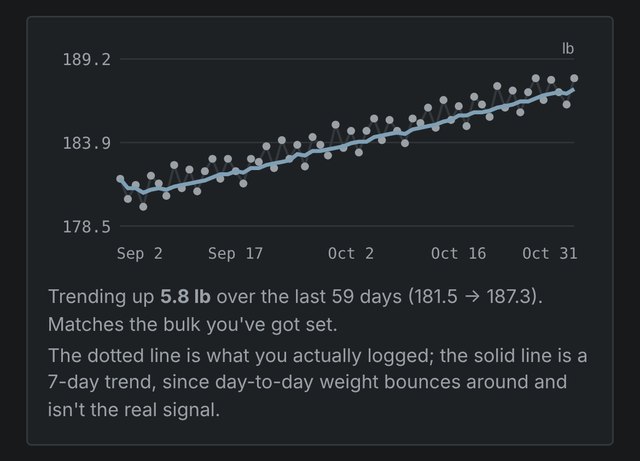
Set a goal, bulking or cutting or neither, and pick how often you want to check in. Weekly by default, or anything from daily to monthly. Log the number and the app draws it.
The useful part is the second line. Day-to-day bodyweight bounces around with water, food and sleep, so the chart draws a seven-day trend through the noise and tells you in words what it is doing: trending up 5.8 lb over the last 59 days, and whether that matches the goal you set.
Friends
See who else actually trained this week
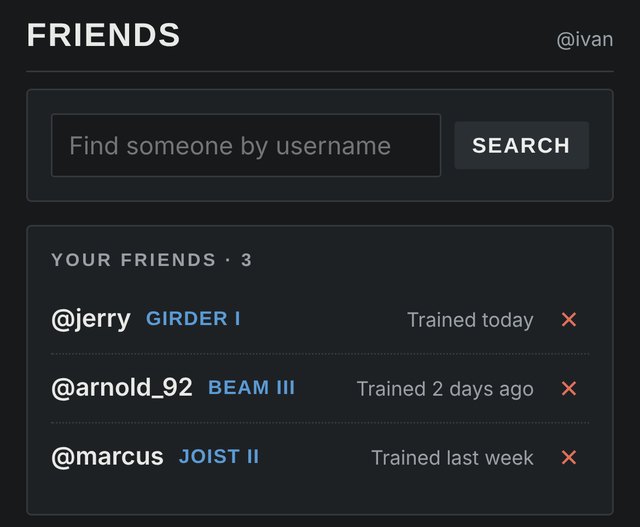
Pick a username, search for your friends, send a request. Once they accept, you see their rank and when they last trained. That is the whole feature: no feed, no comments, no leaderboard to game.
They see your username, your rank, and the date of your last session. Nothing else. Your weights, your bodyweight and your logs stay yours, and you can remove anyone at any time.
Your exercises
Anything missing, you can add
The exercise list covers the usual movements for every muscle, but no list covers every gym. If your machine is not in there, add it under the right muscle and it shows up in the picker from then on, with its own history and its own progression, exactly like a built-in one.
You can also swap any exercise mid-block without losing the plan, and pin a setup note to a movement so the seat height and pin number are waiting for you next time.
All of this is in every plan. There is no higher tier that unlocks the good parts. $60 once, or $5 a month, and you get the whole app either way.